
Champagne Poodleon

About Me
Hi, I'm Ted, and drink much of the Champagne and write most of the articles here. Fascinated by great drink and food - including Champagne!
Most Popular Articles!
- Jacques Selosse
- Cedric Bouchard
- Champagne Houses in Reims
- Good Cheap Wine
- Jacques Lassaigne Champagne

Click Here to see What's New and Updated!
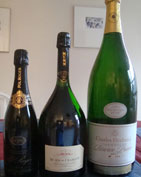
Champagne is delicious sparkling wine made by the "Méthode Champenoise"
and always from Champagne, France. There are other wonderful sparkling wines, but
Champagne is always from France. It's a perfect everyday wine that is
amazingly food friendly. Yes, expensive Tête de Cuvée Champagnes are great
for celebrations also, like the 1st Wednesday of the month or your Aunt Gert's
face lift.
And there are plenty of Champagnes and sparklers that won't break the bank!
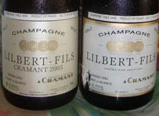 Grower Champagnes
Some farmers not only grow grapes in Champagne but also make and bottle their own Champagne, and this so called "Farmer Fizz" has heaps of personality, and displays terroir most other Champagne do not and can not. It's also fun to drink!
 Champagne
Brands and Houses
Champagne
Brands and HousesMost Champagne Brands like Cristal, La Grande Dame, and Dom Perignon are made by large producers that are called "Champagne Houses," for example Roederer, Veuve Cliquot and Moet and Chandon. Many produce amazing amounts of wine, often with remarkable quality and consistency.
 Sparkling Wines
I prefer Champagne, but there is pretty good sparkling wine made in many areas of the world: California, Australia, New Zealand, Spain, New Mexico, Argentina, Italy, and even Massachusetts. I'm certainly no snob, for example I love most cheap Spanish sparkling wine (called "Cava") and even the stuff from Massachusetts.
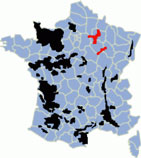
There are many reasons to travel to Champagne and seeing wine producers and visiting their 2000+ year old cellars built in impressive Gallo-Roman chalk mines are but one reason. The charming city of Reims with its Gothic Masterpiece Cathedrale Notre Dame, the old city of Troyes, and the Champagne Routes through the country are just a few reasons.
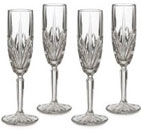 Champagne Glasses and Accessories
You do not need much to enjoy Champagne, but we
prefer proper glasses, although we admit to
occasionally swigging it out of the bottle, "Billionaire on a Yacht Style"
and maybe once or twice drinking it through crazy straws with the odd cute
babysitter. A few other accessories can be useful too, e.g. a Champagne
Bucket and Champagne Stopper.
Recent New and Updated!
Pehu-Simonet - Added TNs for a lovely Grand Cru Blanc de Noirs from this small Grower-Producer.
Henri Giraud - A Small Grower, although technically a Negociant, in Aÿ .
Australian Sparkling Wines - Australia makes some very nice sparklers from the cooler regions, including Tasmania. They also make sparkling reds from Shiraz, Cabernet, and more - I have been horrified by some in the past but am keeping an open mind!
Champagne Didier Chopin - Fruit forward Pinot Meunier and Pinot Noir based wines from the Marne Valley with additional complexity from 3-5 years of aging on their lees.
Jacques Lassaigne - Just tried my second, third, fourth and fifth bottlings, including the awesome Rose de Montgueux - impressive indeed!
Laurent-Perrier - Added a tasting note on their near iconic Cuvée Rosé. It was my go to rose for years!
Vouette and Sorbée - Wild wines - Wine first, Champagne second, all biodynamic, from the Aube.
Krug - New vertical, 85/88/90/95 - simply amazing wines. Nothing is like a Krug!
A.R. Lenobe - A small natural negotiant which grows 60% of their grapes. Their 2006 Rose is an incredibly fun and festive wine!
Cedric Bouchard - A blockbuster all natural, no wood, single vineyard/single varietal /single vintage wines from the Aube in the far south of Champagne. A review of many of his very rare Lieu-dit wines - which are amazing!
Jean Milan - A new tasting note for this Chardonnay specialist on their Symphorine Blanc de blancs Grand Cru 2005, which is absolutely lovely!
Ruppert-Leroy - An exciting small biodynamic grower right on the Burgundy line! I try two radically different wines.
Rene Geoffroy - A massive fan of their Rose, I like the funky Millésime 'Cuvee Volupte 2006 too!
Varnier Fanniere - 4 hectares of Grand Cru Chardonnay in the northern Côte des Blancs.
Champagne Jacquesson - A small producer I love - TNs of the Cuvee 735 and 737 added.
Piper-Heidsieck Cuvée Rare 1998
- I like Piper-Heidsieck, and absolutely loved their Cuvée Rare 1998
from magnum! This is a house I should drink much more of!
Nicolas Gueusquin
- A negociant who makes about 6 million bottles a year and sells
primarily to wholesale, including Japan and West Africa. Sometimes
described ad "Supermarket Champagne" I was pleased with a recent
encounter on United Airlines.
Chartogne-Taillet - Importer Thierry Thiese's 'most exciting young producer in Champagne'
Jacques Selosse - Perhaps my favorite producer, and added tasting notes for the Rose and V.O. (Version Original). Ohhh my!
1990 Vintage Champagne – 23 years later - Wow, these all rocked and many were very young. 1990 may be one of the best vintages of the past 100 years, but I'm not old enough to confirm it! My father is close, but he rarely drinks bubbly!
Sparkling Vouvray - Just added a tasting note for absolutely wonderful Domain Huet Vouvray Petillant Brut 2007 - wow, and a great deal too!
Taittiinger - One of the big boys, making wines of elegance and grace. Their Comptes de Champagne qualifies as one of the nest Champagnes, period! Read our notes on the 2004!
Champagne and Memory - Drink up, medical researchers have discovered that drinking Champagne weekly is good for your memory, including helping to prevent age related memory loss, dementia, and Alzheimers.
Moet and Chandon - The biggest producer period. Just added a tasting note for Moet and Chandon Brut Imperial, the biggest selling Champagne on the planet.
Agrapart -The 04 Avizoise, my favorite so far!
Jacques Selosse Tasting - May 2013, New York City, including all his Lieux-Dits. Simply Amazing!
François Diligent - All new wines and fascinating.
Jean Vesselle - Making Bouzy style powerful and masculine Pinot Noir dominated wines with the structure of red wine.
Paul Goerg - A Co-op in Vertus in the Côte des Blancs making Chardonnay dominated wines. Their Brut Rose is inexpensive and very sensual.
Drappier - Added a tasting note on their Brut Nature Blanc de Noirs - lovely!
Jacques Defrance - A small grower producer in the South of Champagne. Their Brut Prestige is a steal!
A Margaine - Intense wines! Just added notes on the 2006 Special Club Blanc de Blancs
Ployez-Jacquemart - A small negociant with artisanal and intense wines. I like!
South African Bubbly - I was back in South Africa, trying wines and updating almost daily!
Vazard-Coquart - A Chouilly, Cotes des Blancs producer making primarily Blanc de blancs. Their entry level Brut Reserve didn't excite me.
Dosnon & Lepage - A new artisan producer with fascinating wines. I'm impressed!
Sparkling Sake? - A pleasant surprise!
Pierre Gimonnet - Stylish refined Côte des Blancs wines with well integrated minerality. Mainly Blanc de blancs.
Crémant de Bourgogne - Added a tasting note for Bailly Lapierre Brut, a simple and cheap one that is OK. I like their 100% Pinot Noir much better - about US$15 and a B+
Gonet-Medeville - A Small Grower-Producer in Bisseuil making both fun and serious wines. I like 'em!
Rare Wine Company Le Mesnil Champagne - Added a tasting note for the 2002 Cuvee Sans Malo from magnum - a great deal and very nice wine!
Veuve Fourny & Fils - A small Grower in Vertus in the Côte des Blanc, making distinctive 100% Vertus wines.
Naveran Cava - Updated with the awesome Naveran Cava Brut 2010, definitely a best buy in sparkling wines!
Champagne Delamotte - Sister winery (same winemaker and facilities) to the mindblowing Salon and sometimes using their grapes.
Duval-Leroy - Just added a tasting note for the Duval-Leroy Brut, always a crowd pleaser, and a great deal around US$30!
Gruet Winery - Damn Good Sparkling Wines and more from New Mexico. Added a tasting note on their Blanc de noirs (a wonderful B+ rating at under US$20!).
Argentina & Sparkling Wine - Argentina actually produces a lot of Sparkling Wine (Vinos Espumante), and based on what we've tried it's very good!.
Crémant de Bourgogne - Burgundy makes some of the best wines on the planet, period! It makes sense their sparkling wines would be good too, and they are. Less expensive than Champagne, and although not mind-blowing, damn good and damn good values!
- PerrierJouët -
Elegant, delicate, fruity style Champagnes. Best known for their
"Flower Bottle."
- Champagne Lenoble - A
small negociant making Chardonnay dominated wines from the Cote des
Blancs, and a wonderful Blanc de noirs! -
Champagne François Diligent - In the far south, a brand new, revamped, and interesting lineup including an interesting 100% Pinot Blanc!
Janisson-Baradon - a grower producer based in Epernay with 9 hectares of vines.
Camille Savès - Kick Butt Bouzy Champagne I love: creamy, plenty of minerals, complex, and just fun to drink!
Champagne Charles Ellner - Powerful wines from a family run house> Not very well known in the US but producing about 1 million bottles of bubbly a year.
Barefoot Bubbly and Barefoot Champagne - Now owned by Gallo, Barefoot produces an OK budget Brut and Extra Brut, and their Sparkling Pinot Grigio is OK too. I suggest you AVOID the rest of the sparkling wines!
Parxet Cava - Making Spanish Sparkling wines since 1920.
Codorníu Cava - The biggest producer of all sparkling wines made by the traditional method worldwide and where Cava was first made!
Freixenet - A widespread Spanish Cava, especially their Cordon Negro in the black bottle.
Good Cheap Wine - There is plenty of inexpensive wine that rocks.